Traditional Karnataka Handicrafts: A Celebration of Art and Culture
India has a remarkable tradition of handmade artistry, and Karnataka holds a special place in this cultural heritage. From intricately carved wooden objects to colourful lacquered toys, detailed paintings, traditional textiles, and decorative metalwork, traditional Karnataka handicrafts reflect generations of artistic knowledge, regional identity, and creative expression.
Whether you love decorating your home, planning a traditional wedding, collecting handmade objects, or searching for meaningful gifts, Karnataka offers plenty of inspiration. Its craft traditions combine natural materials, distinctive designs, vibrant colours, and techniques passed down through generations.
For home décor enthusiasts and event planners, these crafts also provide ideas for creating distinctive interiors, festive displays, welcoming entrances, and culturally inspired celebrations.
In this guide, we explore Karnataka’s best-known handicraft traditions, their distinctive features, how to incorporate them into modern décor, and what to consider when choosing handcrafted products .
1. What Makes Traditional Karnataka Handicrafts Special?
Karnataka's handicrafts reflect the state's diverse landscapes, historic cities, religious traditions, and artistic communities. Different regions are known for different forms of craftsmanship, giving the state an exceptionally varied creative heritage.
Several features make these crafts particularly appealing:
- Cultural significance: Many designs draw inspiration from local history, folklore, religious traditions, and everyday life.
- Distinctive craftsmanship: Carving, painting, weaving, metalworking, and lacquer finishing require specialised skills.
- Regional identity: Certain crafts are strongly associated with particular towns or districts.
- Decorative versatility: Many handcrafted objects can complement traditional, contemporary, and eclectic interiors.
- Meaningful gifting: Handmade products can communicate appreciation for art, culture, and craftsmanship.
Traditional handicrafts are not simply decorative objects. They can also help preserve regional knowledge and provide a connection to the communities that create them.
2. Mysore Paintings: Elegant Traditional Indian Art
Mysore painting is one of Karnataka’s best-known artistic traditions. It is recognised for its refined compositions, detailed figures, graceful lines, and decorative elements.
Traditional subjects often include Hindu deities, mythological narratives, and scenes inspired by Indian religious and cultural literature. Depending on the artwork, the composition may feature ornamental borders, intricate details, and a carefully balanced arrangement.
How to Use Mysore Paintings in Home Décor
Mysore paintings can become striking focal points in a home.
Consider these styling ideas:
- Living room: Display a painting on a prominent wall, with enough surrounding space to appreciate its details.
- Prayer room: Choose a religious subject that is appropriate for your personal beliefs and traditions.
- Entryway: Place a smaller framed artwork on a console table or a dedicated wall.
- Traditional interiors: Pair the artwork with carved wooden furniture, brass decorative objects, or warm neutral colours.
- Contemporary interiors: Use one painting as an accent against a simple background.
Avoid overcrowding the surrounding wall with too many competing decorative pieces. A carefully chosen painting often makes a stronger impression when it has room to stand out.
Buying Tips
When selecting a traditional painting, examine the details, colours, finish, framing, and information provided by the seller. If you are specifically seeking an authentic traditional artwork, ask about its origin and production technique rather than relying on its appearance alone.
3. Sandalwood Carvings: Detailed Wooden Craftsmanship
Karnataka has a long association with sandalwood and its carving traditions. Sandalwood carving is appreciated for the fine details that skilled craftspeople can create in wood, including floral patterns, figurines, ornamental panels, and religious motifs.
The appearance and value of a carved object depend on factors such as the wood used, carving complexity, workmanship, size, and provenance.
Sandalwood-Inspired Styling Ideas
Wooden decorative objects can introduce warmth and texture into a room.
You can use carved wooden pieces in several ways:
- Place a small decorative carving on a bookshelf or display shelf.
- Combine wooden ornaments with neutral ceramics for a balanced arrangement.
- Use carved panels as inspiration for traditional entrance décor.
- Incorporate wood tones into a display featuring flowers and soft lighting.
- Choose a dedicated display cabinet for delicate or valuable pieces.
For a wedding or festive setting, wooden decorative elements can complement artificial flowers, fabric draping, decorative lighting, and other traditional-inspired accessories.
Important buying consideration: Sandalwood is a regulated and valuable material in some contexts. Verify the material, seller documentation, and applicable purchasing or transport requirements when buying valuable sandalwood products. Do not assume that an item is genuine sandalwood merely because it is labelled or scented as such.
4. Channapatna Toys: Colourful Lacquered Wooden Crafts
Channapatna, a town in Karnataka, is widely associated with colourful wooden toys and lacquerware. These crafts are known for their smooth forms, bright colours, rounded shapes, and playful designs.
Traditional products include spinning tops, small figures, decorative objects, and other turned wooden items. Contemporary interpretations may also include accessories and home décor pieces.
The craft is often associated with the use of lacquer finishes applied to shaped wooden objects. The precise materials and finishing methods can vary by maker and product.
Decorating with Channapatna Crafts
These colourful objects can add character to many spaces.
For a child's room: Display suitable decorative pieces on a shelf, ensuring that products intended only for decoration are kept out of reach of young children.
For a study: A small group of colourful wooden objects can brighten a bookshelf or desk.
For a modern home: Combine a few vibrant pieces with neutral furniture to create contrast.
For gifting: Consider a decorative wooden item for someone who appreciates Indian crafts, playful design, or handmade objects.
When buying toys for children, check the manufacturer's age recommendations, finish, small parts, and applicable safety information. A product described as traditional handicraft is not automatically suitable .
5. Bidriware: Intricate Metal Inlay Craftsmanship
Bidriware is a distinctive metal craft associated historically with Bidar, in the northern part of the Deccan region. It is particularly recognised for contrasting dark surfaces and fine metallic inlay patterns.
Common forms include decorative vessels, boxes, trays, and ornamental objects. The designs may incorporate geometric patterns, foliage, flowers, and other traditional motifs.
Although Bidriware is closely associated with Karnataka's broader Deccan cultural heritage, its history and development also connect with wider regional artistic influences.
How to Style Bidriware
The contrast between dark metal surfaces and decorative inlay can work especially well in elegant interiors.
Try these arrangements:
- Display a decorative vessel on a wooden console.
- Pair a small metal box with books and neutral accessories.
- Use a decorative tray as part of a carefully arranged tabletop display.
- Combine metal objects with cream fabrics, wooden furniture, and understated floral arrangements.
- Place a single piece in a display cabinet alongside other Indian handicrafts.
For wedding décor, the visual contrast of metalwork can inspire table styling, welcome areas, gift displays, and traditional decorative arrangements.
When purchasing Bidriware, ask about the materials, construction, finish, and care requirements. Avoid assuming that every dark metal object with a silver-coloured pattern is an authentic example of the craft.
6. Ilkal Sarees and Karnataka's Textile Traditions
Karnataka's handicraft heritage also includes distinctive textile traditions. Ilkal sarees, associated with the town of Ilkal in northern Karnataka, are particularly recognised for their traditional weaving, characteristic borders, and distinctive pallu designs.
Textiles offer a different way to bring regional craftsmanship into interiors. Their colours, patterns, and textures can influence the appearance of a room without requiring major changes to the furniture or layout.
Textile-Inspired Home Styling
Traditional Indian textiles can inspire creative decorating ideas:
- Use a suitable textile as a decorative accent on a console or side table.
- Coordinate cushions with the colours of a traditional woven fabric.
- Display a folded textile in an open shelf or cabinet.
- Use textile patterns as inspiration when choosing decorative cushions, curtains, or table accessories.
- Combine patterned fabrics with simpler surroundings to avoid visual clutter.
If using a valuable saree or heirloom textile for decoration, consider its preservation needs before placing it in direct sunlight or areas exposed to dust, moisture, or frequent handling.
Choosing Traditional Textiles
Look at the weave, colours, finishing, fibre information, and seller's description. If you are buying a textile specifically for its regional origin, ask whether it was produced using the traditional technique associated with that craft.
For gifts, consider the recipient's preferred colours, intended use, and comfort with caring for a traditional fabric.
7. Kasuti Embroidery: Detailed Needlework
Kasuti is a traditional embroidery craft associated with Karnataka. It is known for detailed geometric and figurative patterns created through carefully planned stitching.
Traditional designs may feature architectural forms, symbolic motifs, and patterns inspired by cultural and religious settings. The final appearance depends on the stitch technique, pattern, fabric, and colours used.
Kasuti-Inspired Decorative Ideas
Embroidery can introduce fine detail and visual interest into home accessories.
Consider:
- Framed embroidered textile panels.
- Decorative cushions featuring traditional motifs.
- Table accessories with embroidered details.
- Fabric accents for a culturally inspired room.
- Carefully coordinated textiles for festive displays.
For wedding styling, embroidery can inspire the use of detailed fabric accents alongside floral arrangements, drapes, and traditional decorative objects.
If buying embroidered products, examine the stitching, backing, fabric quality, and care instructions. Ask whether the embroidery is handmade, machine-made, or a combination of techniques when that distinction matters to you.
8. Rosewood and Other Woodcraft Traditions
Woodworking has an important place in Karnataka's artistic heritage. Carved furniture, decorative panels, boxes, and ornamental objects demonstrate the many ways wood can be shaped into functional and decorative forms.
Rosewood and other timbers have been used in different forms of regional craftsmanship, although the material used in any particular item should always be verified with the seller.
Ideas for Wooden Home Décor
Wooden objects work well in homes because they can introduce texture and warmth.
For a traditional living room, consider decorative boxes, carved accents, or wooden frames.
For a modern home, choose a small number of pieces with clean lines or natural-looking finishes.
For a festive setting, wooden stands and display surfaces can complement flowers, fabrics, and decorative lighting.
For an entryway, a wooden console can provide a base for a small arrangement of flowers and carefully selected decorative objects.
How to Choose Wooden Handicrafts
Before buying, consider the following:
- Material: Confirm the type of wood rather than relying on appearance alone.
- Finish: Check for uneven surfaces, visible damage, and the finish appropriate to the product.
- Construction: Examine joints, edges, and stability where relevant.
- Size: Measure the intended display area before ordering.
- Maintenance: Follow the maker's cleaning and care guidance.
- Origin: Ask for details if the regional origin or traditional technique is important to you.
For valuable wood products, verify any relevant material restrictions or documentation before purchasing or transporting them.
9. Traditional Karnataka Handicrafts for Modern Home Décor
Traditional craftsmanship can work beautifully in modern interiors. The key is to combine decorative objects thoughtfully instead of making every element compete for attention.
Create a Traditional Display Corner
Choose a console, shelf, or cabinet as the focal point. Arrange a painting, a wooden carving, or a metal decorative object with enough empty space around each item.
A small artificial flower arrangement can introduce colour without taking attention away from the handicraft.
Style a Living Room with Regional Accents
Start with a simple foundation of neutral furniture, then add decorative pieces inspired by Karnataka's craft traditions.
For example:
- A traditional painting on the wall.
- A wooden decorative object on a shelf.
- A small metal vessel on a console.
- A textile accent on a chair or side table.
- An artificial floral arrangement in a suitable vase.
Choose a consistent colour palette so the room feels coordinated.
Decorate an Entrance
A welcoming entrance does not need dozens of objects. A decorative table, a floral arrangement, and one or two handcrafted accents can create an inviting display.
For festivals and family celebrations, you can add appropriate seasonal elements or traditional-inspired decorations.
Use Lighting to Highlight Craftsmanship
Good lighting can make the details of a painting, carved object, or metal ornament easier to appreciate.
Use lighting appropriate to the room and the materials on display. Avoid placing heat-producing lights too close to delicate textiles, wooden pieces, or artificial flowers.
10. Traditional Karnataka Handicrafts for Weddings and Events
Indian weddings and celebrations often bring together regional traditions, decorative materials, floral arrangements, and carefully planned lighting.
Karnataka's craft traditions can provide inspiration for wedding stages, entrance displays, welcome areas, gift tables, and photo backdrops.
The goal is not necessarily to reproduce a historical setting. Instead, choose a few traditional design elements and combine them with contemporary event decoration.
Wedding Stage Decoration
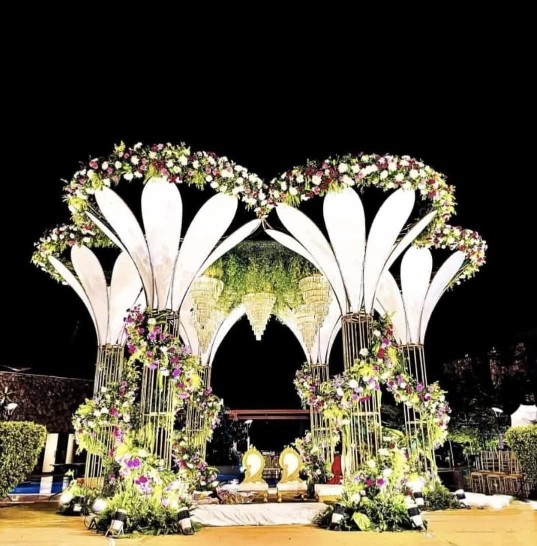
For a traditional-inspired wedding stage, consider a coordinated arrangement of:
- Artificial flower garlands or floral panels.
- Decorative wooden elements.
- Fabric backdrops in complementary colours.
- Suitable traditional-inspired ornaments.
- Carefully positioned decorative lighting.
For example, warm neutral fabrics, floral accents, and wooden details can create a welcoming stage design. For a more colourful celebration, vibrant flowers and patterned fabrics can provide a festive atmosphere.
Entrance and Welcome Decoration
The entrance is often the first decorated space guests see.
A coordinated arrangement may include artificial flowers, decorative stands, suitable handcrafted accents, and lighting. Keep walkways clear and make sure all stands and decorations are stable.
Table and Display Decoration
Traditional handicrafts can also inspire the styling of welcome tables, gift displays, and decorative corners.
Use a limited selection of objects at different heights, leaving enough room for guests to move comfortably and interact with the display.
Photo Backdrops
For a photo area, combine a clear focal point with flowers, fabric, and decorative elements inspired by regional craft traditions.
Choose colours that complement the venue and event theme. Avoid using valuable or fragile handicrafts in locations where they could be knocked over or damaged.
Maryam Handicraft connection: If you are planning a celebration, explore relevant artificial flowers, decorative hanging pieces, stage decorations, and backdrop accessories available through Maryam Handicraft. Choose products according to the event's dimensions, colour scheme, setup requirements, and budget.
11. Traditional Karnataka Handicrafts as Thoughtful Gifts
Handcrafted gifts can be meaningful because they reflect artistic skill and cultural identity. A well-chosen object may suit a housewarming, wedding, anniversary, festival, or personal celebration.
Here are a few ideas based on different interests.
| Recipient or occasionGift inspirationWhat to consider | ||
| Art enthusiast | Traditional painting | Subject, framing, and provenance |
| Home décor lover | Wooden or metal decorative object | Interior style and display space |
| Child or family | Suitable wooden toy | Age guidance and product safety |
| Textile enthusiast | Traditional woven fabric | Material, colours, and care |
| Wedding couple | Decorative keepsake | Personal taste and home décor |
| Festival host | Small decorative handicraft | Occasion and cultural relevance |
How to Select the Right Handicraft Gift
Before purchasing, think about the recipient's interests and the intended use of the gift.
A person who appreciates traditional art may prefer a painting or a detailed decorative object. Someone who enjoys colourful interiors may prefer a smaller craft piece that can be displayed easily.
For a wedding gift, consider whether the object will fit into the couple's home. Compact pieces may be easier to display and transport than large decorative items.
If you are buying online, review product dimensions, material descriptions, packaging details, shipping information, and return conditions where applicable.
12. How to Identify and Buy Traditional Karnataka Handicrafts
When purchasing regional handicrafts, the difference between an attractive decorative product and an authentic traditional craft can matter.
Not every product inspired by Karnataka's artistic traditions was made in Karnataka, and not every handmade object uses a traditional technique.
Use these practical checks to make a more informed decision.
Check the Product Description
Look for specific information about the material, technique, dimensions, place of production, and maker when available.
Descriptions such as "traditional style" or "Indian-inspired design" do not necessarily establish regional origin.
Ask About the Making Process
If you want an authentic regional handicraft, ask whether the item was handmade, machine-assisted, or produced using a contemporary interpretation of a traditional design.
A clear answer helps you understand what you are purchasing.
Examine the Finish
Look at the overall construction, visible details, edges, surface finish, and any decorative elements.
Small variations may be consistent with some handmade techniques, but workmanship still matters. Ask the seller about any feature you do not understand.
Consider Practical Use
A decorative object intended for a shelf may not be suitable for everyday handling. A textile designed for clothing may have different care needs from one intended for display.
Choose a product according to its intended purpose.
Compare Sellers Carefully
Do not rely on photographs alone when evaluating a valuable or collectible item. Compare product descriptions, material information, seller transparency, and applicable return policies.
For expensive pieces, request additional details about provenance and authenticity where relevant.
13. Caring for Traditional Handicrafts
Different materials require different care. Before cleaning an item, check the seller's recommendations and avoid applying liquids, polishes, or chemicals without confirming that they are suitable.
Wooden Objects
- Keep wooden items away from excessive moisture.
- Avoid prolonged exposure to direct sunlight.
- Dust with a soft, suitable cloth.
- Follow material-specific care instructions.
Paintings
- Avoid touching painted surfaces unnecessarily.
- Protect artwork from moisture and excessive sunlight.
- Use suitable framing and hanging hardware.
- Ask a qualified conservator for advice about valuable or delicate paintings.
Metalwork
- Keep metal objects in conditions appropriate to their material and finish.
- Avoid abrasive cleaning products unless specifically recommended.
- Use a soft cloth where suitable.
- Follow specialist advice for valuable pieces or delicate inlay.
Textiles and Embroidery
- Check fibre and washing instructions.
- Store valuable textiles in clean, dry conditions.
- Avoid prolonged exposure to sunlight.
- Use appropriate storage methods for delicate or heirloom pieces.
Lacquered Wooden Crafts
- Handle delicate objects carefully.
- Avoid soaking them in water.
- Use only cleaning methods suitable for the finish.
- Check whether the item is intended for decorative use or practical handling.
Good care helps preserve the appearance of a handicraft and reduces the risk of avoidable damage.
14. Bringing Karnataka's Craft Inspiration into Maryam Handicraft Décor
At Maryam Handicraft, we focus on decorative products, artificial flowers, wedding decorations, home décor, and gifting inspiration.
Traditional Karnataka handicrafts offer many ideas for creating displays that feel colourful, welcoming, and culturally inspired.
You can use these ideas when planning your own home or event:
For home styling: Combine floral accents with carefully chosen decorative objects and complementary colours.
For festive décor: Use flowers, decorative hangings, and lighting to create a coordinated display.
For weddings: Plan the stage, entrance, and photo backdrop around a consistent design theme.
For gifting: Pair a suitable decorative item with a thoughtful presentation.
For event professionals: Consider how colour, height, lighting, and texture work together across the venue.
When choosing products, start with the space you want to decorate. Measure the area, select a colour palette, decide which element should attract attention, and then choose complementary accessories.
You can explore the relevant product collections on the Maryam Handicraft website at maryamhandicraft.in. Add internal links to the specific artificial flower, wedding decoration, hanging décor, or backdrop product pages when those pages are available on your website.
Frequently Asked Questions
1. What are the most famous traditional Karnataka handicrafts?
Karnataka is known for several distinctive craft traditions, including Mysore paintings, Channapatna lacquered wooden toys, Bidriware associated with Bidar, sandalwood carving, Kasuti embroidery, Ilkal sarees, and other regional woodcrafts and textiles.
2. What is special about Channapatna handicrafts?
Channapatna is especially known for colourful wooden toys and lacquerware. The craft features shaped wooden objects with distinctive forms and decorative finishes, including traditional toys and contemporary decorative products.
3. What is Karnataka famous for in traditional painting?
Mysore painting is one of Karnataka's best-known painting traditions. It is recognised for detailed compositions, graceful figures, ornamental elements, and subjects drawn from Indian religious and cultural stories.
4. Which Karnataka handicrafts are suitable for home décor?
Depending on your taste and budget, you might consider traditional paintings, wooden decorative objects, Bidriware, lacquered wooden crafts, embroidered textiles, or regional woven fabrics. Check the material, dimensions, and care requirements before buying.
5. Are traditional Karnataka handicrafts suitable for wedding decoration?
Yes. They can inspire wedding stage designs, entrance displays, welcome tables, and photo backdrops. Wooden accents, traditional patterns, fabric draping, artificial flowers, and decorative lighting can be combined to create a coordinated setting.
6. How can I identify an authentic Karnataka handicraft?
Review the seller's information about the craft's origin, materials, production technique, and maker. Ask specific questions when authenticity matters. A traditional-looking design alone does not prove that a product was made in Karnataka using a traditional technique.
7. How should I maintain traditional handicrafts?
Care depends on the material. Wooden items generally benefit from protection against excessive moisture, while paintings and textiles may require careful handling and protection from sunlight. Always follow product-specific care guidance.
8. Where can I find decorative products inspired by traditional Indian styles?
You can explore Maryam Handicraft for artificial flowers, wedding decorations, decorative hangings, backdrop accessories, and home décor products. For specific traditional Karnataka crafts, look for sellers who provide clear information about regional origin and production methods.
Conclusion: Celebrate Karnataka's Artistic Heritage
Traditional Karnataka handicrafts offer a wonderful way to appreciate India's regional creativity. From Mysore paintings and Channapatna wooden toys to Bidriware, Kasuti embroidery, sandalwood carving, and Ilkal textiles, each craft has its own visual character and cultural significance.
These traditions can inspire more than collections and display cabinets. They can influence modern home styling, wedding decoration, festive arrangements, and thoughtful gifts.
When choosing a handicraft, look beyond its appearance. Consider the materials, craftsmanship, origin, intended use, and care requirements. Supporting knowledgeable sellers and skilled artisans can also help you make more informed purchasing decisions.
At Maryam Handicraft, we believe that thoughtful decoration can make homes, celebrations, and special occasions more memorable. Explore our artificial flowers, decorative products, and wedding décor collections at maryamhandicraft.in to find inspiration for your next creative project.