Gujarat Handicrafts: Traditional Art and Home Décor Ideas
Gujarat is renowned for its colourful traditions, distinctive craftsmanship, and vibrant artistic heritage. From beautifully embroidered textiles to intricate beadwork, carved wooden objects, decorative pottery, and traditional wall hangings, Gujarat handicrafts reflect the creativity of artisans and the cultural diversity of the region.
Today, these traditional crafts offer inspiration far beyond souvenirs and collectibles. They can help transform ordinary living spaces into welcoming homes, add character to modern interiors, create memorable wedding decorations, and make thoughtful gifts for people who appreciate Indian artistry.
For anyone searching for Gujarat handicrafts, traditional Indian home décor, handmade decorative items, or ethnic decoration ideas, understanding these craft traditions can open up many creative possibilities.
At Maryam Handicraft, we appreciate how decorative objects, artificial flowers, handcrafted-inspired accessories, and carefully coordinated styling can bring personality to homes, celebrations, and special occasions. This guide explores Gujarat's important handicraft traditions and explains how to use their visual appeal in contemporary décor.
1. What Makes Gujarat Handicrafts Special?
Gujarat's handicraft traditions have developed through generations of artistic practice, regional influences, and community knowledge. Different parts of the state are associated with different materials, techniques, colours, and decorative styles.
Some crafts are recognised for their intricate patterns, while others stand out because of their vibrant colours, geometric designs, mirror embellishments, or natural textures.
Several characteristics make Gujarat handicrafts especially appealing for decoration:
- Vibrant colours: Red, yellow, green, blue, orange, and other rich shades often feature in traditional textiles and decorative designs.
- Intricate patterns: Geometric shapes, floral motifs, repetitive patterns, and regional designs add visual interest.
- Textural variety: Embroidery, beads, woven fibres, wood, clay, and metal create different tactile and visual effects.
- Cultural identity: Traditional crafts connect decorative objects with local customs, celebrations, and artistic heritage.
- Versatile styling: Traditional craft-inspired elements can complement rustic, ethnic, bohemian, contemporary, and eclectic interiors.
The appeal of these crafts lies in their individuality. A single embroidered wall hanging, decorative textile, or carefully selected handcrafted object can become a focal point without requiring an entire room to follow one theme.
For modern homeowners, the best approach is often to select a few meaningful decorative elements and coordinate them with existing furniture, lighting, and colours.
2. Traditional Gujarat Handicrafts Worth Exploring
Gujarat offers a diverse range of craft traditions. The following examples demonstrate how regional artistry can inspire home décor, gifting, and event styling.
A. Kutchi Embroidery and Decorative Textiles
The Kutch region is particularly well known for its diverse embroidery traditions. Depending on the community and technique, textiles may feature colourful threads, decorative stitches, geometric patterns, mirrors, and elaborate surface embellishments.
Kutchi embroidery is especially attractive to people who enjoy expressive, colourful interiors.
How to use embroidery-inspired décor at home:
- Display a traditional embroidered textile as a wall feature.
- Style colourful cushion covers against a neutral sofa.
- Use embroidered fabric accents in a reading corner.
- Combine patterned textiles with simple wooden furniture.
- Create a coordinated display using textiles, decorative cushions, and warm lighting.
For a balanced appearance, allow one embroidered item to take centre stage. If the textile contains several bright colours, choose relatively simple accessories around it.
This approach preserves the visual richness of the craft while preventing a small room from feeling overcrowded.
B. Traditional Mirror Work
Mirror work is a recognisable feature of several western Indian decorative traditions. Small reflective pieces incorporated into textiles and decorative objects catch available light and create an eye-catching finish.
Mirror embellishments can inspire a variety of decorative arrangements, including ethnic wall hangings, cushion accents, festive displays, and bohemian-style interiors.
Mirror-work decoration ideas:
- Pair mirror-work textiles with plain curtains.
- Use a decorative mirror as a focal point in an entryway.
- Combine reflective details with warm-toned lighting.
- Add embroidered accents to a festive seating area.
- Coordinate mirror embellishments with brass-coloured or wooden accessories.
Mirror work can also complement wedding and celebration décor. When combined with flowers, fabric draping, and suitable lighting, reflective details can help create a lively decorative backdrop.
For a modern finish, avoid placing too many reflective objects together. A few well-positioned pieces usually create a more deliberate design.
C. Beadwork and Decorative Craft
Beadwork is another important element of Gujarat's craft heritage. Traditional beaded objects can feature colourful arrangements, intricate patterns, and decorative details created through careful placement.
Beadwork is particularly suitable for small decorative accents because it adds texture and colour without necessarily taking up much space.
Ideas for incorporating beadwork into interiors include:
- Hanging a decorative toran above an entrance.
- Using beaded ornaments in a festive display.
- Styling a handcrafted accessory on a console table.
- Combining beaded details with embroidered fabrics.
- Choosing small decorative pieces for shelves or display cabinets.
A traditional doorway toran can make an entrance feel welcoming, while smaller beaded ornaments can add interest to a living room or bedroom.
When buying beaded handicrafts, examine how securely the components are attached and whether the design suits the intended location.
D. Patola and Bandhani Textiles
Patola and Bandhani are two distinctive textile traditions associated with Gujarat, although their techniques and visual characteristics differ.
Patola, particularly the tradition associated with Patan, is known for complex geometric and patterned designs created through an intricate weaving process.
Bandhani is a tie-dye tradition in which fabric is tied in selected areas before dyeing, producing characteristic patterns when the ties are removed.
Both traditions can inspire decorative styling, fashion accessories, and gift presentation.
For home interiors, consider using these textiles as inspiration for:
- Colour combinations in a living room.
- Decorative fabric accents.
- Festive table styling.
- Coordinated cushion and curtain palettes.
- Gift wrapping for special occasions.
Authentic Patola textiles and Bandhani products vary considerably in technique, material, and craftsmanship. If you are purchasing a specific traditional textile, check its origin, construction, and material rather than assuming that every similarly patterned product uses the traditional process.
These textile traditions demonstrate how colour and pattern can become the foundation of a complete decorative theme.
E. Wooden Handicrafts and Carved Decorative Objects
Wooden decorative objects bring warmth and visual depth to an interior. Traditional carving and decorative woodwork can inspire furniture accents, wall displays, trays, frames, and small ornamental objects.
Wood works particularly well in homes where the colour palette includes cream, beige, terracotta, earthy brown, or muted green.
Practical wooden décor ideas:
- Place a carved wooden tray on a coffee table.
- Use a decorative wooden frame to highlight artwork.
- Combine wooden objects with artificial flowers.
- Style a small collection of wooden accessories on open shelves.
- Pair natural-looking wood with fabric and metal accents.
When selecting wooden handicrafts, consider the finish, dimensions, maintenance requirements, and suitability for the intended location.
A carved wooden object can also become a thoughtful housewarming gift, especially for someone who prefers traditional materials and understated decoration.
F. Clay, Pottery, and Terracotta-Inspired Décor
Clay and terracotta objects bring an earthy character to decorative arrangements. Their natural colours and varied surfaces work well with rustic, traditional, and contemporary interiors.
Decorative vessels can be displayed on shelves, side tables, entryway consoles, or covered outdoor seating areas, depending on their construction and suitability.
Try these styling ideas:
- Place a decorative clay vessel beside wooden furniture.
- Use an attractive pot as a container for suitable artificial flowers.
- Combine terracotta tones with cream textiles and greenery.
- Arrange several vessels of different heights together.
- Incorporate earthy decorative objects into a festive display.
Before using a vessel for water, food, or live plants, check whether it is designed for that purpose. Decorative finishes and porous materials may not be suitable for every use.
Terracotta-inspired décor is an easy way to introduce warmth without relying on bright colours .
3. Gujarat Handicrafts and Modern Home Décor
Traditional handicrafts do not need to be used exclusively in traditional interiors. With thoughtful placement, they can complement modern furniture, minimalist rooms, and contemporary decorative accessories.
The secret is to balance colours, textures, and proportions.
Create a Traditional Living Room
A living room is an excellent place to introduce Indian craft-inspired decoration because it offers opportunities to display textiles, decorative objects, flowers, and lighting together.
Consider this combination:
- A neutral sofa with colourful embroidered cushions.
- A wooden coffee table with a decorative tray.
- Artificial flowers arranged in a complementary vase.
- A traditional wall hanging as the main focal point.
- Warm lighting that creates a comfortable atmosphere.
If you prefer a colourful interior, introduce one or two additional shades from the embroidered textiles. If you prefer a minimalist look, keep the surrounding furniture and walls relatively simple.
The result can feel culturally inspired without appearing overly formal.
Decorate an Entrance or Foyer
The entrance establishes the decorative character of a home. Traditional torans, decorative mirrors, wooden accessories, and floral arrangements can help make the space feel welcoming.
For a simple entrance arrangement:
- Select a decorative toran or wall hanging.
- Place a console table beneath it, if space permits.
- Add a small decorative vessel with artificial flowers.
- Introduce a suitable lamp or other complementary accessory.
- Keep the surface organised so the main decorative elements remain visible.
A small entrance benefits from a limited number of accessories. In a larger foyer, you can experiment with taller decorative objects or a more elaborate arrangement.
Style a Bedroom with Craft-Inspired Details
Bedrooms generally benefit from a calmer decorative palette. Gujarat-inspired textiles can introduce colour while maintaining a restful atmosphere.
Try using an embroidered cushion, a decorative fabric panel, or a patterned accessory as the main feature. Complement it with plain bedding and simple bedside accessories.
For example, a room with cream bedding could incorporate accents of rust, indigo, or muted green inspired by traditional Indian textiles.
Artificial flowers can add another layer of decoration. A small arrangement on a dressing table or bedside console can complement the colour scheme without overwhelming the space.
Design a Festive Home Display
Festivals and family gatherings are ideal occasions to bring together traditional handicrafts, floral arrangements, decorative lights, and ornamental accessories.
A festive display might include:
- A decorative toran near the entrance.
- Flowers arranged around a suitable display table.
- Traditional-looking vessels or decorative bowls.
- Warm fairy lights used according to their safety instructions.
- Colour-coordinated textiles and cushions.
Choose a central theme before buying accessories. For example, a combination of maroon, gold, and cream can create a rich festive appearance, while terracotta, beige, and green can produce a more natural look.
Maryam Handicraft's decorative products and artificial flower arrangements can help inspire coordinated displays for homes and celebrations.
4. Gujarat-Inspired Wedding and Event Decoration Ideas
Indian weddings and celebrations frequently use colour, textiles, flowers, lighting, and decorative structures to create memorable spaces. Gujarat's colourful craft traditions offer inspiration for event planners who want to introduce regional character into their designs.
You do not need to reproduce an entire traditional setting. A few carefully selected elements can communicate the theme effectively.
A. Traditional Wedding Welcome Area
A wedding welcome area can combine traditional textile patterns with contemporary floral styling.
Consider a decorative entrance featuring colourful fabric panels, floral arrangements, and suitable ornamental accessories. A toran-inspired detail can reinforce the traditional theme, while coordinated flowers create a fresh visual effect.
Styling suggestions:
- Select a consistent colour palette before choosing materials.
- Combine patterned fabric with relatively plain background panels.
- Use artificial flowers where reusable decorations are preferred.
- Coordinate the entrance with the venue's existing architecture.
- Keep walkways clear and ensure decorative structures are securely installed.
For event professionals, reusable decorative components may be useful across different occasions when they are maintained and stored appropriately.
B. Colourful Mehndi and Haldi Decoration
Mehndi and Haldi celebrations often lend themselves to bright colours and playful decorative themes.
Gujarat-inspired embroidery, mirror-work motifs, colourful textiles, and floral arrangements can contribute to a lively setting.
Popular colour combinations to consider include:
- Yellow, orange, and green.
- Pink, coral, and cream.
- Turquoise, yellow, and white.
- Red, maroon, and gold.
Use the selected colours consistently across the backdrop, seating area, table decorations, and accessories.
Artificial flowers can be incorporated into floral panels, decorative arrangements, and selected backdrop details. Their suitability depends on the design, lighting, and installation conditions.
C. Traditional-Inspired Stage Decoration
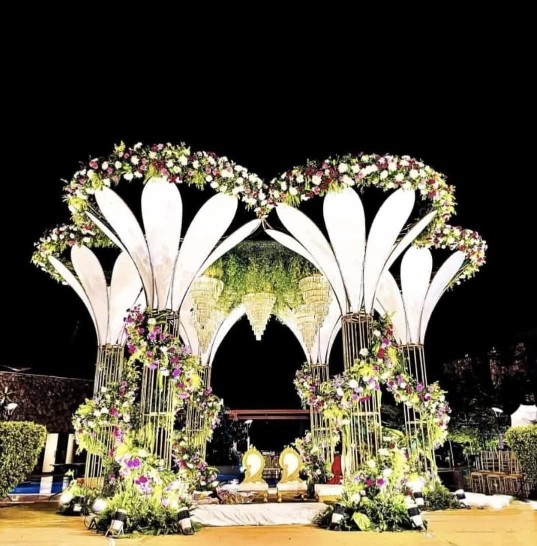
A stage is often the visual centre of a wedding, reception, or cultural celebration. A Gujarat-inspired design can combine patterned textiles, decorative panels, flowers, and warm lighting.
For an elegant appearance, begin with a simple backdrop structure. Introduce traditional patterns through selected fabric panels or decorative accents rather than covering every surface with competing designs.
Artificial flowers can frame the stage, soften the appearance of geometric panels, or create visual continuity between the stage and surrounding venue.
A practical stage-planning checklist includes:
- Measure the available stage and backdrop area.
- Establish the event's main colour palette.
- Select a suitable backdrop design.
- Determine where flowers, lighting, and ornamental elements will be placed.
- Check structural stability and electrical safety.
- Ensure the arrangement leaves sufficient space for performers, guests, and photography.
At Maryam Handicraft, products such as decorative flowers, hanging ornaments, stage accessories, and lighting-related decorative items can provide inspiration when planning coordinated event designs. Confirm the suitability of individual products for your specific installation before use.
D. Combine Traditional Craft Details with Modern Lighting
Lighting changes how decorative materials appear, particularly in evening celebrations.
Warm illumination can emphasise wooden textures, metallic accents, and colourful fabrics. Decorative LED lighting can also create visual depth when positioned thoughtfully.
For a balanced result, combine one main lighting feature with softer supplementary lighting. Avoid excessive brightness or too many competing effects, especially in photography areas.
Traditional craft-inspired patterns can provide visual interest during the day, while carefully planned lighting helps the decoration remain attractive after sunset.
5. Gujarat Handicrafts as Thoughtful Gift Ideas
Handicrafts can make meaningful gifts because they offer more personality than many standard decorative items. The best choice depends on the recipient's preferences, available space, and intended use.
Housewarming Gifts
For someone moving into a new home, consider decorative objects that can be displayed easily.
Suitable ideas include:
- A traditional-style wall hanging.
- A decorative tray.
- An ornamental vessel.
- An embroidered textile accessory.
- An artificial flower arrangement.
- A coordinated set of small home décor pieces.
Neutral or earthy colours can be practical when you do not know the recipient's existing interior palette.
Wedding and Anniversary Gifts
Decorative gifts can celebrate important occasions while remaining useful after the event.
A flower arrangement, decorative centrepiece, or carefully selected ornamental object can suit recipients who enjoy decorating their homes.
For wedding gifts, consider the couple's preferred style. Someone who loves traditional Indian interiors may appreciate colourful textile-inspired designs, while someone with a modern home may prefer simpler shapes and restrained colours.
Festive Gifts
During festivals, decorative accessories can be paired with thoughtful presentation to create attractive gifts.
Consider combining a small decorative item with a complementary artificial flower arrangement or festive accessory. Use packaging that protects delicate embellishments during transport.
Before purchasing, check the item's dimensions, material, care requirements, and packaging arrangements.
6. How to Choose the Right Gujarat Handicrafts
The variety of traditional craft products can make choosing the right item challenging. A little planning helps you select pieces that are suitable for your home, event, or gifting needs.
Consider the Purpose
Begin by identifying how the item will be used.
Are you buying a decorative object for a shelf, a textile for a wall, a gift for a family member, or an accessory for a wedding backdrop?
The intended use influences the appropriate size, material, construction, and price range.
Check Materials and Craftsmanship
Products inspired by traditional handicrafts may use different materials and manufacturing methods.
Before buying, examine:
- The material and finish.
- The quality of visible stitching or decorative attachment.
- The consistency of the design.
- The security of beads, mirrors, and other embellishments.
- Whether the item is suitable for its intended location.
- The care instructions provided by the seller.
If you are looking specifically for an authentic regional craft, ask the seller about its origin and production technique. A product inspired by a traditional design is not necessarily made using the original regional process.
Choose the Right Size
An attractive decorative object may not work well if it is too large or too small for its intended space.
Measure the available area before ordering wall hangings, stage decorations, or larger decorative accessories.
For wall displays, consider the relationship between the object's width and the furniture beneath it. For event decoration, measure the complete backdrop area and account for the space required for seating, movement, and photography.
Coordinate Colours
Traditional Indian handicrafts often feature vibrant colours, but this does not mean every decorative item needs to be colourful.
Choose one dominant colour and two or three complementary shades. Use them across textiles, flowers, lighting accents, and other accessories.
For example:
| Décor styleSuggested colour paletteSuitable decorative elements | ||
| Traditional Indian | Maroon, gold, cream | Ornamental accessories and patterned textiles |
| Colourful ethnic | Pink, orange, turquoise | Embroidered details and floral arrangements |
| Natural and rustic | Terracotta, beige, green | Wooden objects and earthy vessels |
| Contemporary ethnic | White, indigo, warm wood | Simple decorative objects and patterned accents |
| Festive elegance | Red, cream, gold | Floral displays and coordinated decorative accessories |
These are styling suggestions rather than fixed rules. Adapt the palette to the existing room, venue, and personal preferences.
Compare Value Rather Than Price Alone
When comparing handicrafts, consider the material, construction, dimensions, finish, and suitability for your needs.
For event decorators, reusable products may be worth considering if they can be stored and maintained appropriately. For occasional home decoration, a smaller statement piece may be more practical than an elaborate collection.
Always review the final product details before placing an order.
7. How to Maintain Handicrafts and Decorative Accessories
Proper care can help preserve the appearance of decorative products. However, the right cleaning method depends on the material and construction.
Textile and Embroidered Items
- Follow the care instructions supplied with the item.
- Avoid harsh cleaning products unless specifically recommended.
- Protect delicate embroidery and embellishments from snagging.
- Store textiles in a clean, dry place.
- Keep them away from prolonged direct sunlight when fading is a concern.
Wooden Decorative Objects
- Remove loose dust with a soft, dry cloth.
- Avoid excessive moisture unless the finish is designed to tolerate it.
- Follow the manufacturer's instructions for cleaning and polishing.
- Keep wooden items away from conditions that may damage their finish.
Beaded and Mirror-Work Products
- Handle delicate pieces carefully.
- Check for loose embellishments before display.
- Use a gentle cleaning method suitable for the item's material.
- Avoid pulling on threads, beads, or attached decorative components.
Artificial Flowers and Decorative Displays
Artificial flowers can be useful for reusable arrangements, but their maintenance requirements depend on the materials used.
Remove surface dust gently and follow any product-specific cleaning instructions. Store arrangements in a way that helps prevent crushing, bending, or deformation.
For event decorators, organise accessories by type and label storage containers where practical. This can make it easier to locate coordinated decorations for future celebrations.
8. Where Gujarat Handicrafts Fit into Contemporary Interior Design
The growing interest in personalised interiors has created opportunities to combine traditional visual influences with modern decorative choices.
Gujarat handicrafts can contribute to several popular interior styles.
Bohemian interiors: Combine colourful textiles, decorative cushions, natural-looking materials, and carefully arranged ornaments.
Minimalist interiors: Choose one distinctive embroidered textile or decorative object and allow it to stand out against a simple background.
Rustic interiors: Pair wooden accessories and earthy vessels with natural textures and muted colours.
Contemporary Indian interiors: Combine traditional motifs with clean furniture lines, coordinated lighting, and restrained decorative accents.
Festive interiors: Introduce temporary displays using flowers, decorative hangings, textiles, and suitable lighting, then store reusable items carefully after the occasion.
The key is to use traditional craftsmanship as a source of inspiration rather than treating every decorative element as part of a single fixed style.
9. Exploring Handicraft-Inspired Décor with Maryam Handicraft
Creating an attractive interior or event display involves more than selecting individual products. The overall effect depends on how colours, textures, decorative objects, flowers, and lighting work together.
Maryam Handicraft specialises in decorative products, artificial fibre flowers, wedding decorations, home décor, and event-oriented accessories. These product categories can help inspire coordinated arrangements for living rooms, festive displays, wedding stages, and other special occasions.
When planning a decoration project, consider the following approach:
- Decide on the occasion or room you want to decorate.
- Select a theme inspired by traditional Indian artistry.
- Choose a consistent colour palette.
- Identify the main decorative feature.
- Add complementary flowers, accessories, and lighting.
- Check the dimensions and suitability of every item.
- Arrange the pieces so that the finished display feels balanced.
You can explore the relevant home décor, artificial flower, and event decoration collections on the Maryam Handicraft website at maryamhandicraft.in. Select products according to your design requirements, and check individual listings for current specifications and ordering details.
10. Frequently Asked Questions About Gujarat Handicrafts
1. What are the most popular Gujarat handicrafts?
Gujarat is known for diverse traditional crafts, including Kutchi embroidery, Patola weaving, Bandhani tie-dye, beadwork, mirror-work textiles, and regional wood and clay crafts. The availability and characteristics of individual products vary by region and artisan.
2. Which Gujarat handicrafts are suitable for home décor?
Embroidered textiles, decorative torans, beaded ornaments, wooden accessories, clay vessels, and traditional-style wall hangings can all be used in home décor. Choose products that complement your interior colours, available space, and preferred decorative style.
3. How can I decorate my home using Gujarat-inspired designs?
Start with one distinctive decorative element, such as an embroidered textile or patterned wall hanging. Complement it with coordinated cushions, wooden accessories, artificial flowers, or suitable lighting. Keep the remaining décor relatively simple if you want the traditional piece to stand out.
4. Are Gujarat handicrafts suitable for wedding decorations?
Yes. Traditional craft motifs can inspire wedding entrances, stage backdrops, mehndi decorations, Haldi settings, and reception displays. Colourful fabrics, toran-inspired details, flowers, and decorative accessories can help create a coordinated theme.
5. What is the difference between Patola and Bandhani?
Patola is a traditional weaving technique associated particularly with Patan in Gujarat and is known for intricate patterned textiles. Bandhani is a tie-dye technique that creates patterns by tying sections of fabric before dyeing. Both have distinctive visual characteristics and cultural significance.
6. What should I check before buying traditional handicrafts?
Check the material, dimensions, finish, construction, care instructions, and suitability for your intended use. If authenticity or regional origin matters to you, ask the seller about the craft technique and where the product was made.
7. Can traditional Gujarat handicrafts complement modern interiors?
Absolutely. A traditional textile, decorative vessel, or handcrafted-inspired accessory can add colour and personality to a contemporary interior. Pair distinctive patterns with simple furniture, neutral backgrounds, and carefully selected accessories for a balanced appearance.
8. Where can I find decorative products for home styling and events?
You can explore decorative accessories, artificial flowers, wedding decorations, and related products through Maryam Handicraft at maryamhandicraft.in. Review individual product listings to confirm their specifications, suitability, and ordering information.
Conclusion: Celebrate Gujarat's Artistic Heritage Through Décor
Gujarat handicrafts offer a rich source of inspiration for people who appreciate traditional Indian artistry, colourful textiles, intricate patterns, and decorative craftsmanship. From Kutchi embroidery and Bandhani fabrics to Patola textiles, beadwork, wooden accessories, and earthy decorative objects, these traditions provide countless ideas for personalising homes and celebrations.
The best decorative arrangements combine cultural inspiration with practical choices. Consider your available space, select complementary colours, pay attention to materials, and use distinctive pieces where they can make the greatest visual impact.
Whether you are styling a living room, preparing a festive display, planning a wedding stage, or searching for a thoughtful gift, traditional Indian craft aesthetics can help you create a distinctive atmosphere.
Explore Maryam Handicraft for artificial flowers, decorative accessories, home décor, and wedding decoration inspiration. Discover products that suit your creative vision and bring a coordinated finishing touch to your next decoration project.